World Robot Olympiad 2026 · Future Innovators Senior · Zagreb
Cableguard
Guarding the lifelines of the Alps. An autonomous robot that rides a steel rope, photographs it from all four sides and finds damage with a neural network it carries on board.
A steel rope does not fail suddenly. It weakens for years — and today it is still checked by eye.
14
people died
when the haul rope at Stresa–Mottarone snapped on 23 May 2021
68 %
of the wires at the break
had failed from fatigue and corrosion long before that day
2,450
cableways in Switzerland
and their steel ropes age: wires break, corrosion and lightning leave marks
1 in 2
small cableways
has financial problems — the check that saves lives has to get cheaper
A person rides a slow-moving gondola and watches the rope go by — slow, expensive, prone to error, and it leaves no record the next check could be compared with. A magnetic test by a testing body happens only every few years. Cableguard works in the gap between two tests: it photographs the whole rope as often as the operator wants, and damage that grows slowly shows up as a change between two runs.
Figures: Wikipedia, swissinfo, EFK, SRF. Cableguard sees the surface of the rope. It adds to the magnetic test by an accredited body and never replaces it.
Our Solution
This is our CAD model — every printed part, both motors, the Raspberry Pi and the drivers. Scroll through the robot.
Now run it yourself.
The same parts, free to turn. The buttons play the robot's own routines — at its own speed.
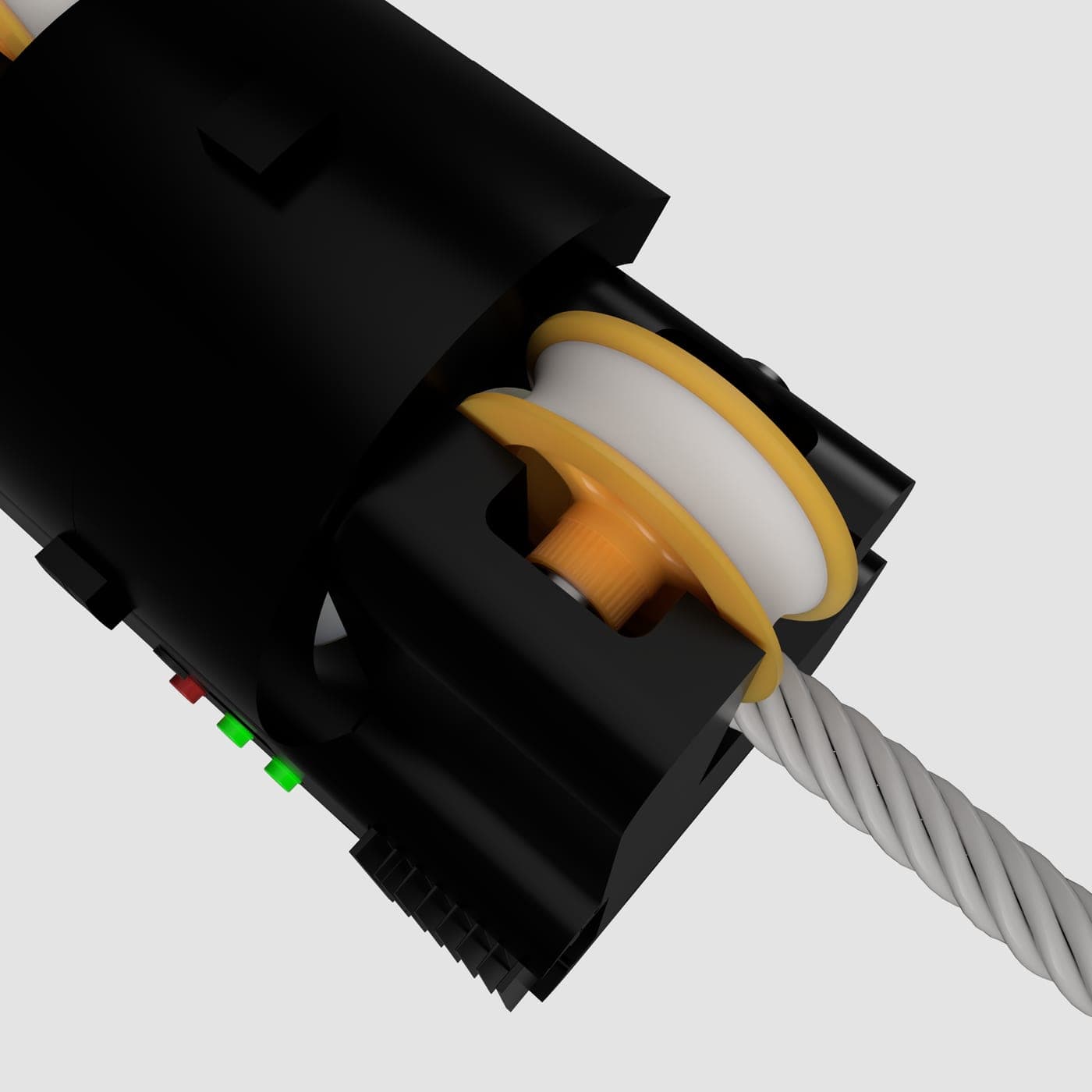
A groove, not a flat wheel
The weight of the robot presses the rope into a V-shaped groove in the insert. That wedge is the grip.
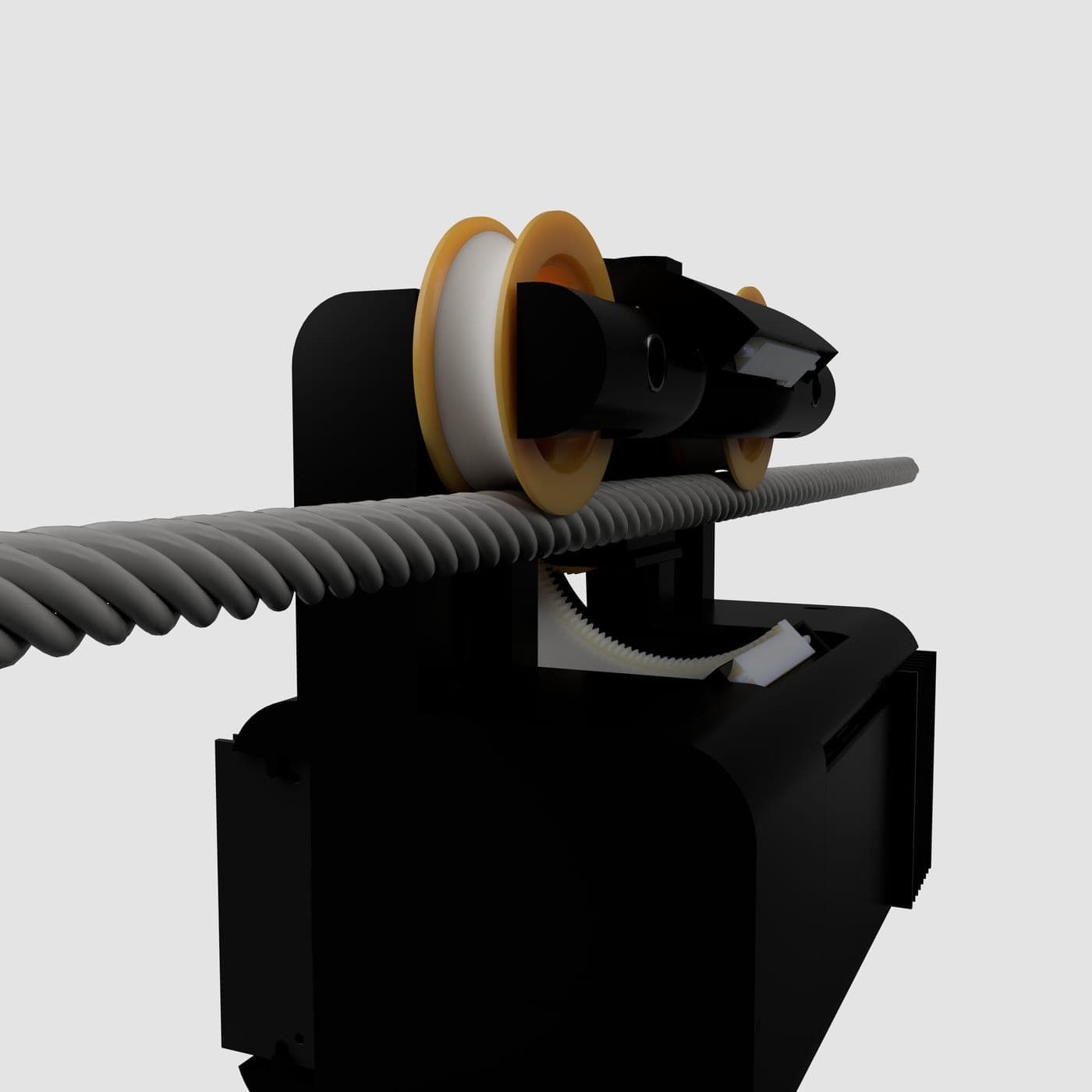
One ring, two cameras
A second NEMA 23 turns the toothed ring through a printed gear. It always swings back the way it came, so the camera cables never wind up.
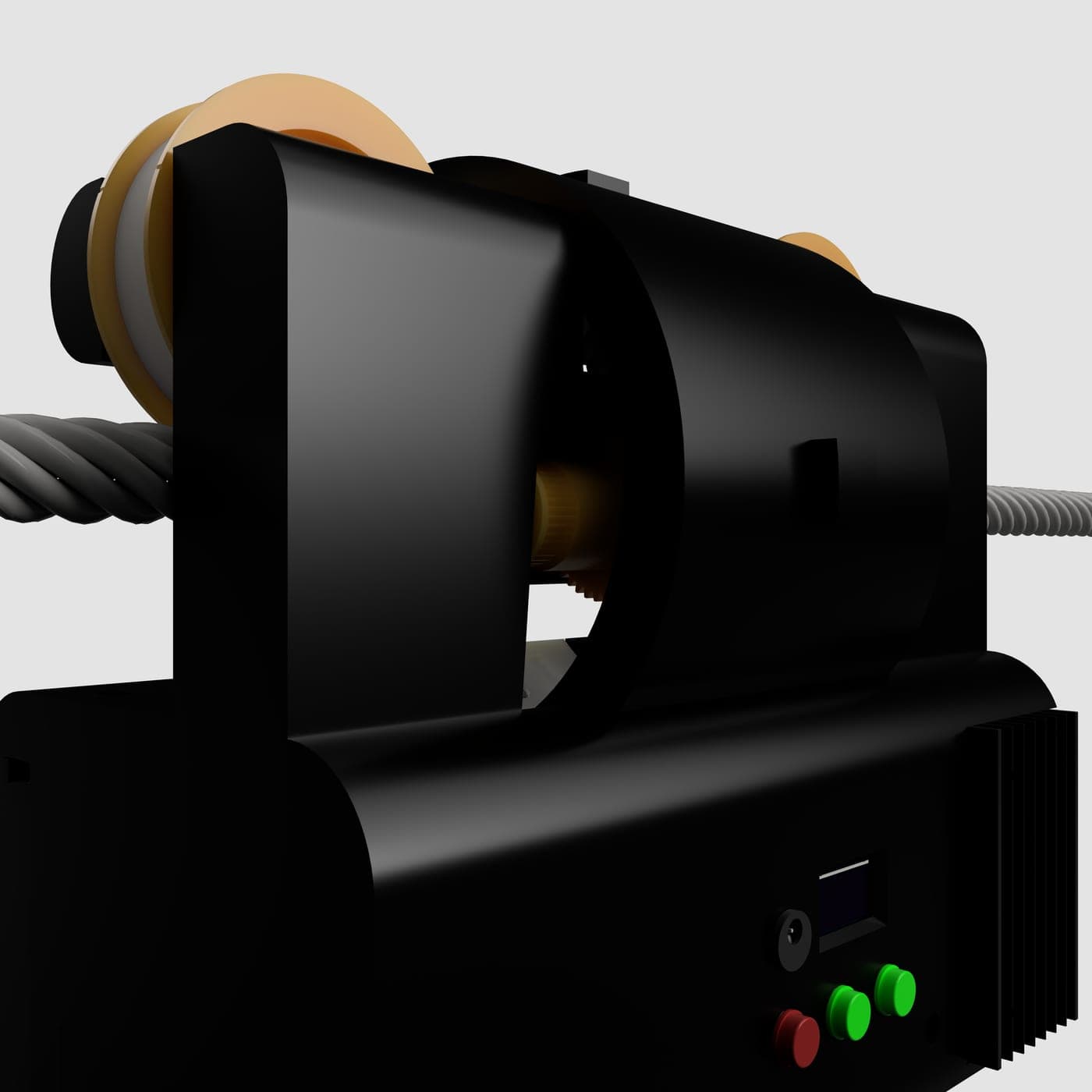
Start without a phone
Display and buttons on the control side. The red one starts a run; each state has its own sound on the buzzer.
The AI rides along. No connection needed.
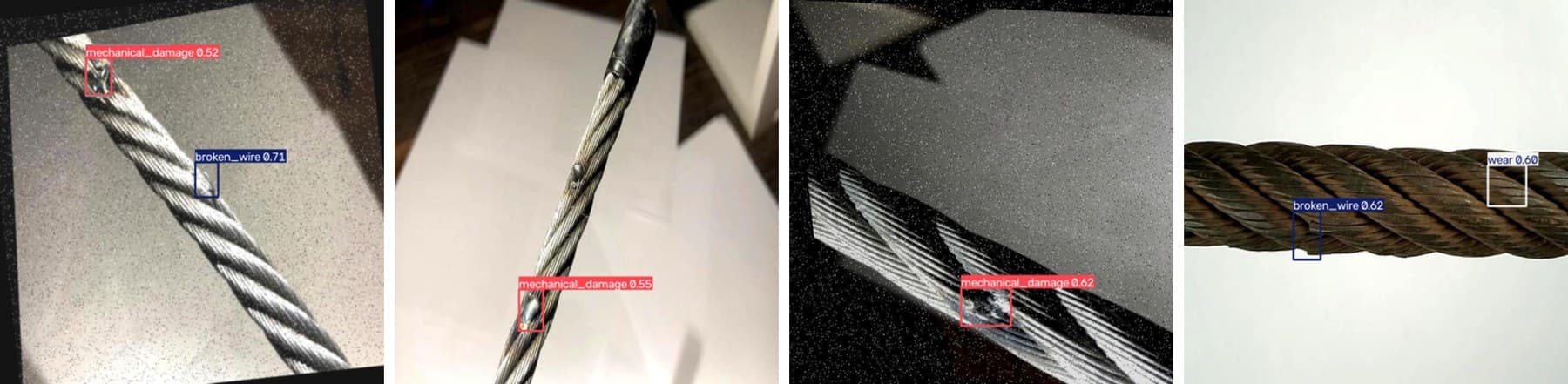
YOLO26s, an object detector with 9.5 million parameters, trained by us and converted to NCNN so it runs on the ARM processor of the Raspberry Pi 5. It draws a box around every damage and says how sure it is.
22,000
rope photos
two public collections, merged by our own script
8
classes of damage
reported as local fault or loss of metallic area, as rope inspectors know them
96 %
of marked damages found
on validation photos the network never trained on
74 %
of its boxes are real damage
it reports from 10 % confidence: a false alarm costs one look
The morning after, the operator knows what is new.
The web app shows both cameras, the position and the speed live, keeps every inspection of a rope and compares two of them: what is new, and what has disappeared. Every finding comes with its photo and its place on the rope.
Our interface, rebuilt here with demo data — click through it, and press Start scanning on the live run. The playback runs forty times faster than the robot, which really drives 31 mm a second.
Three robots in one season.
Each version answered the same question in a different way: how do we find damage on a rope?
Regional final
V1 · May 2026
One camera, the images analysed on a server with OpenCV. Our own ESP32-S3 board plus an STM32H7.
PLA wheels slip on steel, and images sent through two microcontrollers arrived too unreliably.
Swiss final, 2nd place
V2 · June 2026
Magnetic flux leakage: a ring of eight Hall sensors around the rope, on our own ESP32-S3 board.
The readings were too unreliable to judge a rope — and a real magnetic head needs a yoke machined from iron.
Open Championship
V3 · October 2026
Two cameras on a rotating ring and a YOLO26 network on a Raspberry Pi 5, rewritten from an empty repository in August.
Our first completely reliable solution. The magnetic head stays in the design as an upgrade.
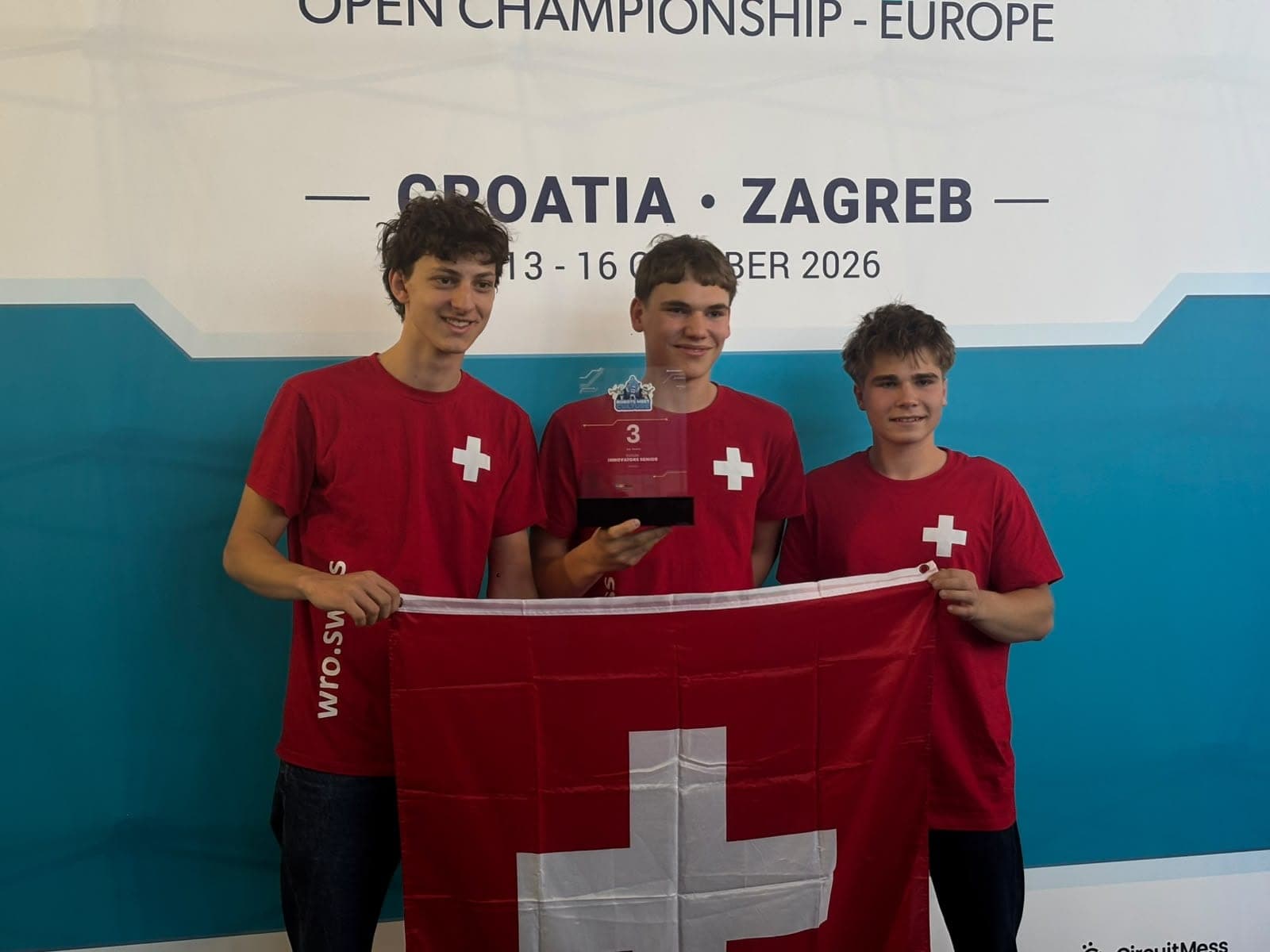
3rd placein Europe
WRO Open Championship Europe, Future Innovators Senior — Zagreb, 13 to 16 October 2026. Second at the Swiss final in June brought us there.
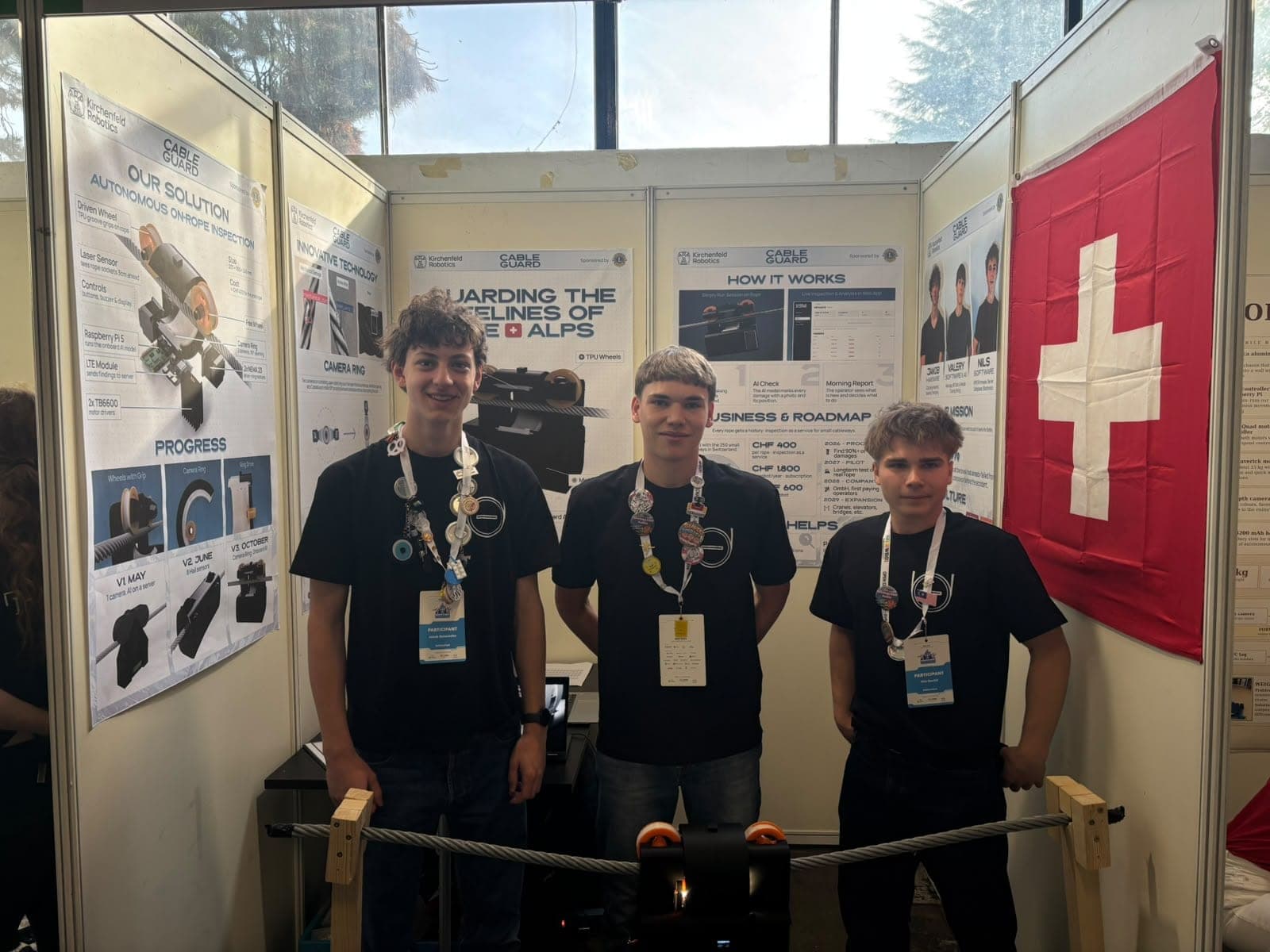
Jakob Gutersohn, Nils Buchli and Valéry Piot, coached by David Bänziger.
Thank you
Cableguard and the trip to Zagreb were made possible by our sponsors.